

Where does a painting truly begin? What is the very first impulse from which an image eventually emerges? Is it a colour that suddenly catches my attention? A feeling I cannot yet name? A line from a poem, a recurring number, or some seemingly insignificant detail from everyday life?
There is no single answer.
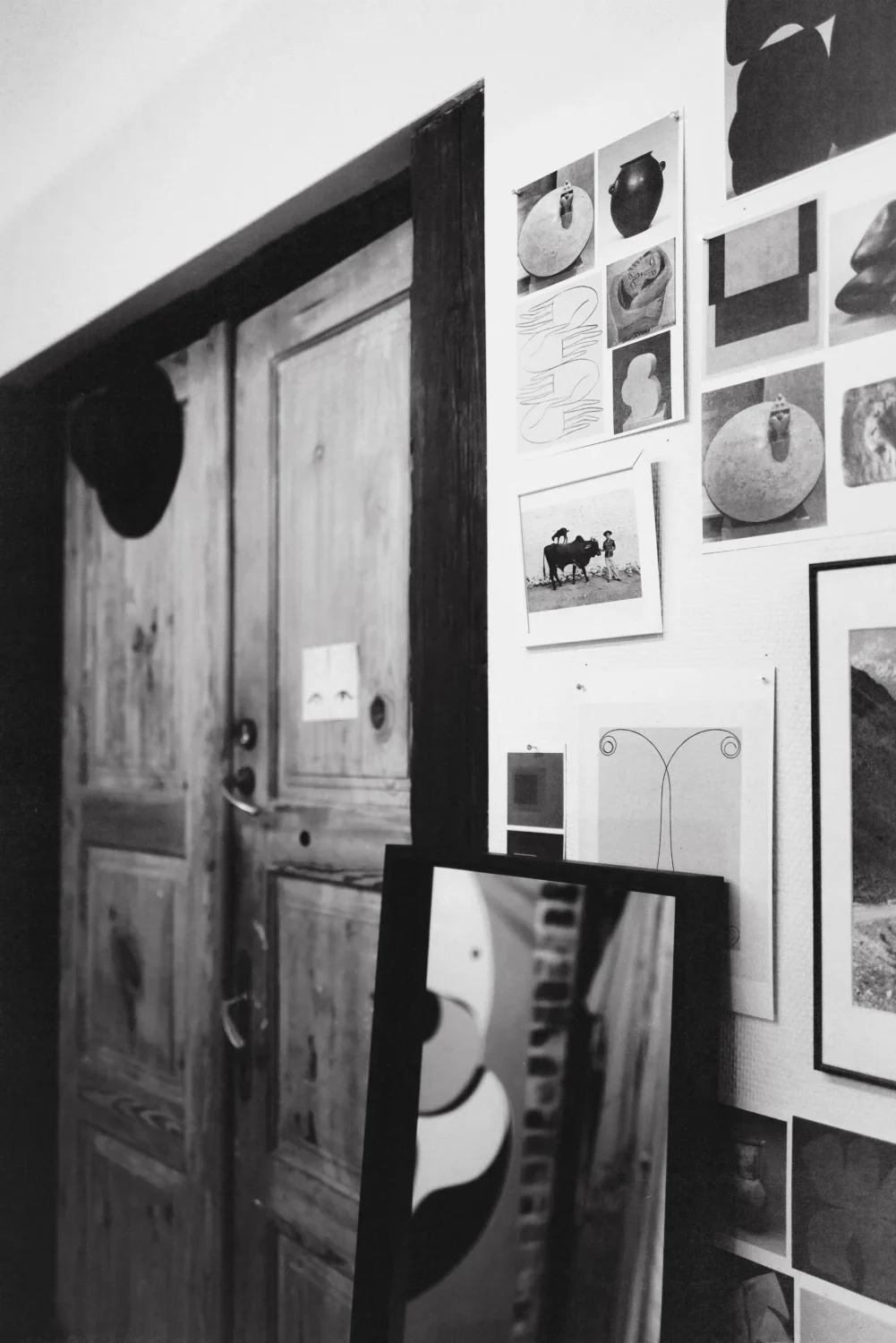
Increasingly, I feel that the first impulse for a piece appears long before I can consciously recognise it. It comes from different layers of the conscious and the subconscious, constantly influencing one another. That is why my creative process has never been limited to being in the studio or working with paint. It includes everything that shapes the way I live and observe myself: psychotherapy, spiritual exploration, meditation, my relationship with the physical body, and the ongoing attempt to understand my thoughts, emotions, and what lies beneath them.
All is connected.
I need to live in order to create. To breathe, move, train my body, meditate, observe my inner processes, and remain receptive to what surrounds me. All of this becomes an invisible layer of the creative process from which the symbols begin to emerge. Those symbols then become stories, narratives, and images that eventually find their way onto the canvas.
Sometimes even the simplest detail can become an impulse. A button that has come loose. A number that keeps appearing. A phrase I happen to read.
Yet I do not think the detail itself is what matters the most. Like the tip of an iceberg, it reveals only a small part of something much larger beneath the surface. Behind it lies an entire constellation of inner experiences, questions, intuition, associations, and things I do not yet have words for.
From spontaneity to listening
My relationship with the canvas has changed considerably over time.
I used to work in a much more chaotic way. I relied more heavily on immediate emotion. My body would move faster than my thoughts could catch up. Canvases were covered, wiped away, and started again. There was a great deal of movement and uncertainty in that process.
Today, it is all much, much quieter.
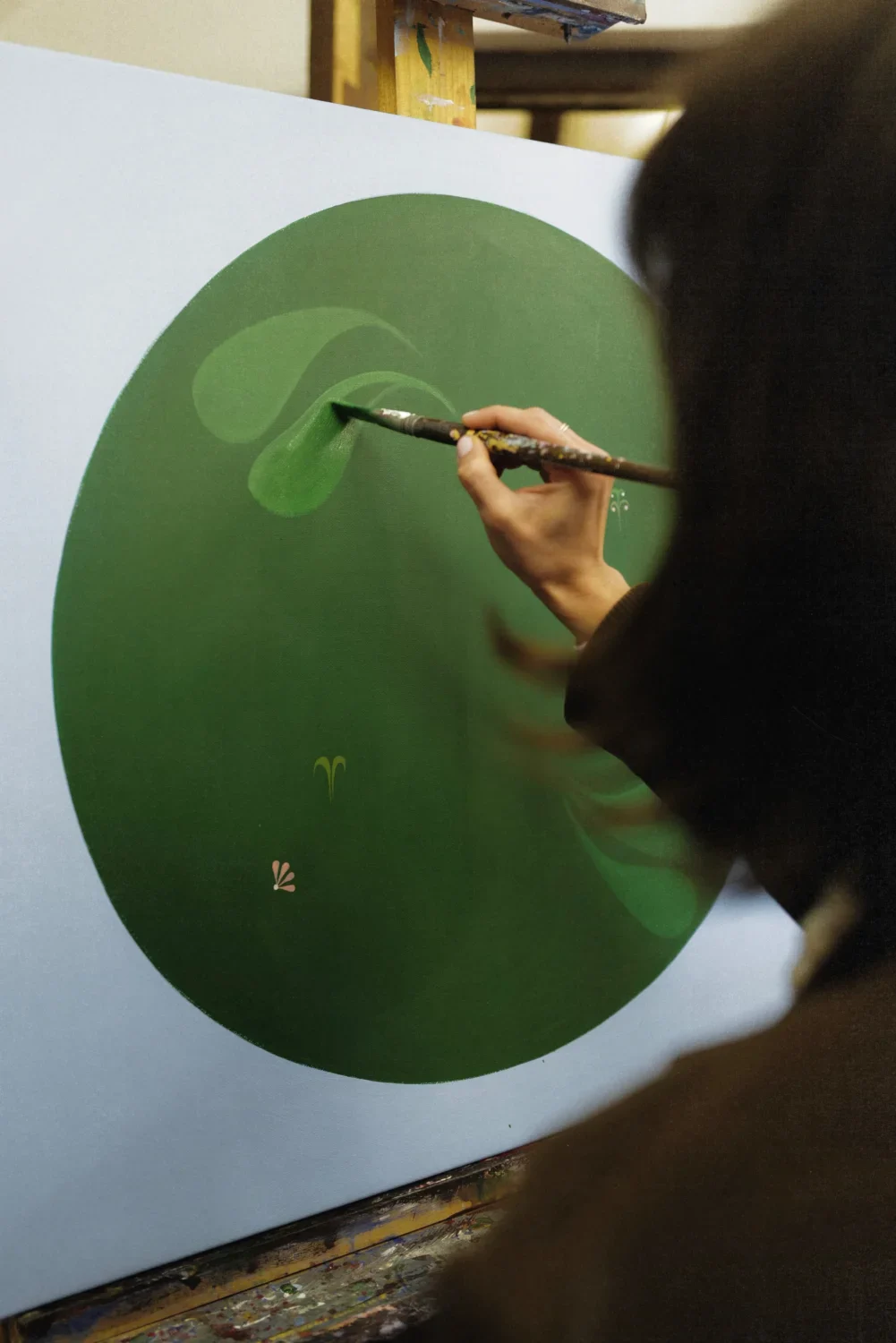
Now when I stand in front of a blank canvas, I do not always know what I want to see there. Perhaps I no longer need to know. Some days I can spend a long time simply looking at the white surface and waiting. Waiting for that something to emerge. Not as a clear idea, but as a feeling.
The wait has become a key part of my creative process.
I see the canvas as a space for exploration, a field where I can play, make mistakes, and search. At the same time, I try to enter it with a certain sense of respect: for myself, for the process, and for whatever is trying to express itself through me.
Perhaps that is why painting today for me feels much closer to meditation than to spontaneous action. The emotion is still there. I have simply learned not to take control of it so quickly.
When the work begins to speak for itself
I like it when a painting resists.
The more I work, the more I feel that I am not so much the author of a work as I am its intermediary. This does not mean that I have no clear intention or that I don’t take decisions. It means that I try to leave room for something I do not yet understand.
Sometimes a painting contains what, at first glance, I might seem a mistake. An unfinished quality. A brushstroke that did not turn out as expected. An element that seems to be asking to be corrected.
Yet at time that is exactly the part I want left untouched.
I am drawn to the idea that the strength of a piece does not necessarily lie in its perfection. Sometimes what appears to be a mistake is where and how the painting becomes alive. It creates tension and ambiguity, leaving space for the viewer to enter the work not through a fixed meaning, but through their own experience.
That is why I do not always want to “fix” a painting.
I am more inclined to understand why it does not want to be fixed.
And when is it enough?
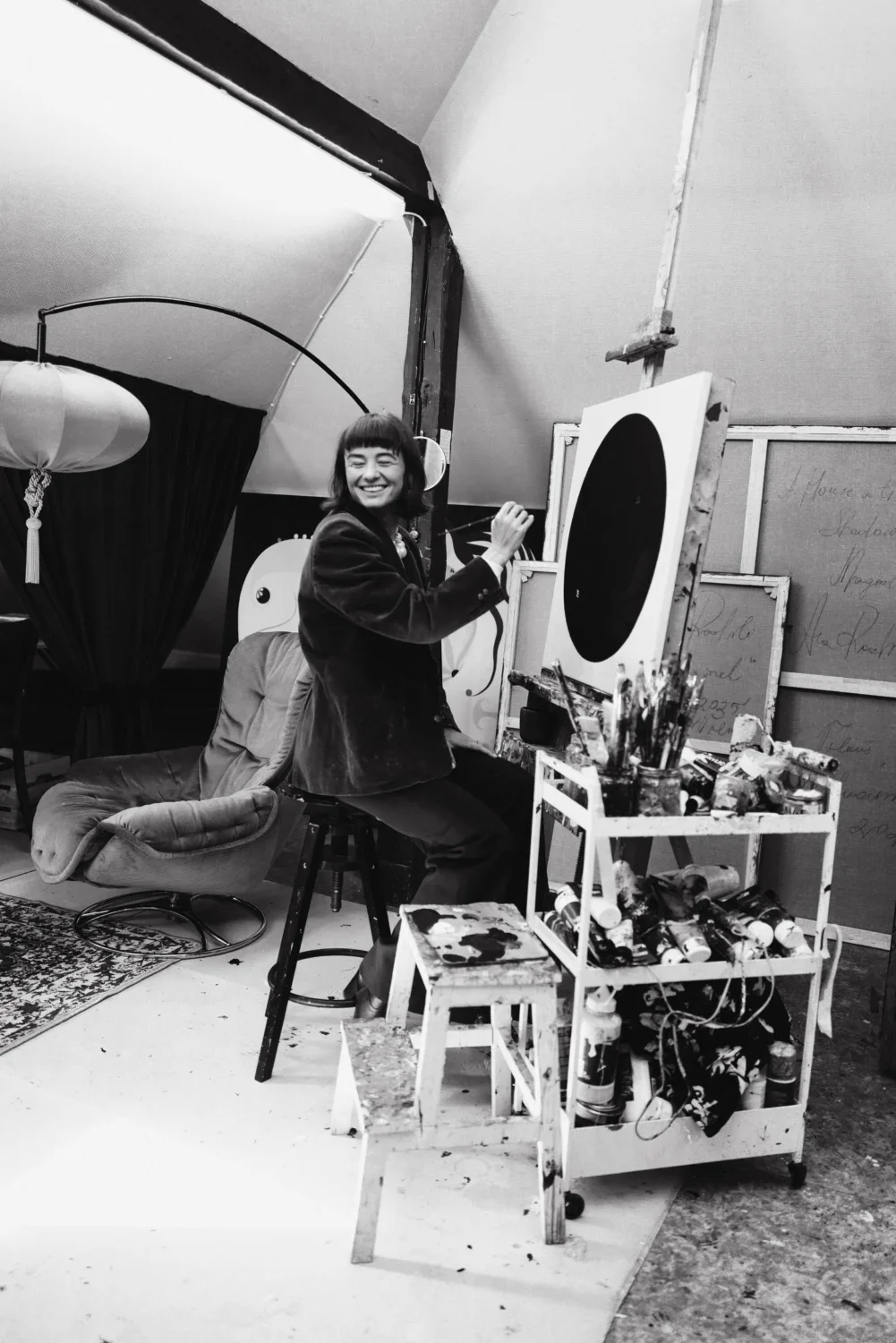
I never consciously decide when a given piece is finished.
At some point, I simply feel that nothing more is needed. It is a deeply intuitive feeling, almost as if the painting closes itself.
Perhaps this is why trust has become such an important part of my creative process. At a certain point, I have to stop asking myself whether I have done enough, whether everything is beautiful enough, correct enough, or complete enough. I simply have to recognise the moment when the work has become fully itself.
What happens when a painting leaves me?
I think this is where my deepest hope as an artist lies.
I do not want someone standing in front of my painting to necessarily understand what I do. I do not want to give them a single key or tell them what they are supposed to see.
What matters much more to me is that the work moves something within them.
I would like the canvas to silence the viewer, even if only for a moment. For the viewer’s attention to shift from the outside world inwards. For them to experience silence not as emptiness, but as a space where something deeply personal can emerge.
Perhaps even that strange feeling that, somehow, everything is where it is meant to be.
This is where a true encounter with a piece begins. Not when the viewer understands what I wanted to say, but when the painting begins to tell them something of their own.
Everything that exists behind the canvas remains unseen: the experiences, the psychotherapy, the meditation, the body, the intuition, the questions & doubts, and the small details of everyday life.
Perhaps that is how it should be.
Maybe a painting is precisely the place where things that cannot be seen can briefly take shape.
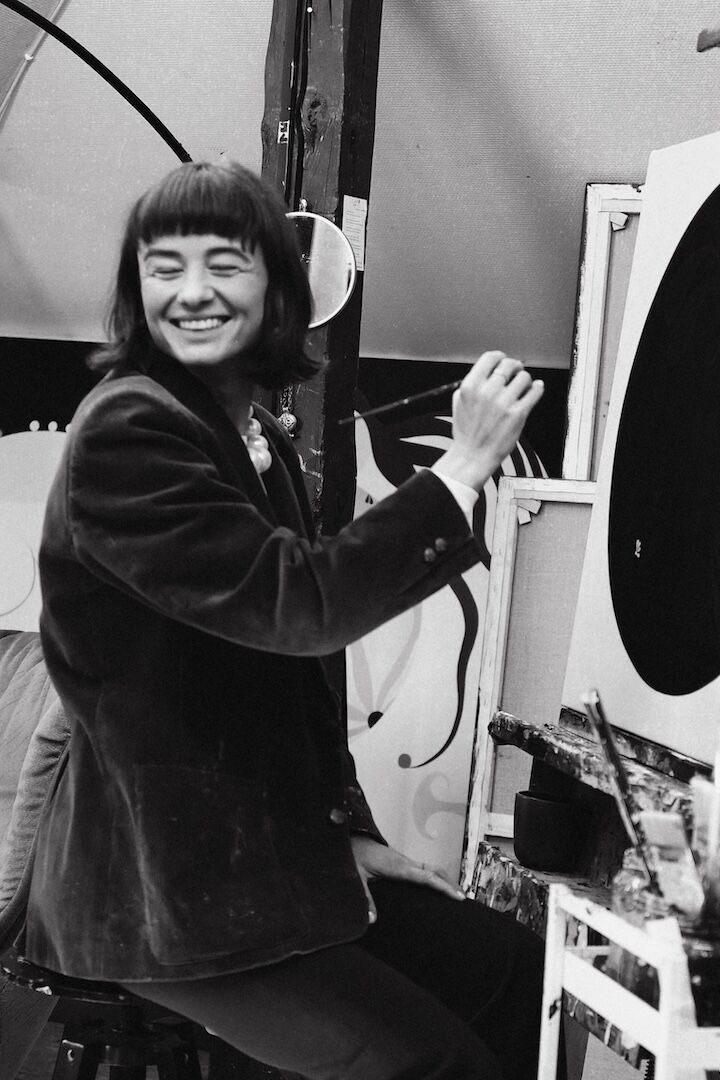
Photography: Vita Vilkeliškytė
Receive my monthly letters three months before they appear here, plus news of new work and occasional offers.
Related entries
My creative Feng Shui
When people first step into my studio, they are often surprised. It looks nothing like those white, minimalist artist studios where every object…
Four years and a single May
More than four years have passed since my last letter to you. In these years, spaces and inspirations have changed, yet one all-encompassing form of…
About Ritual, Symbolism and Intuition with The Knotty Ones
A conversation with The Knotty Ones. We talk painting, symbolism and quiet rituals that guide the beginning of each of my works. “Hands only have…